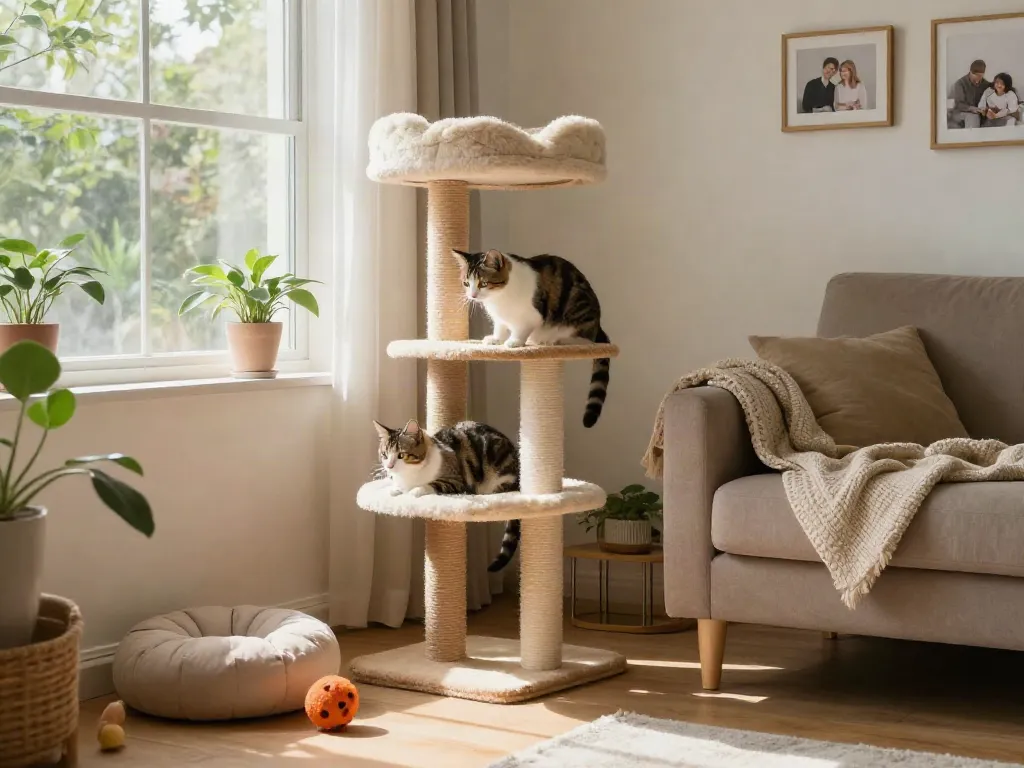
Understanding the Benefits of Cat Towers
For pet owners, providing a stimulating environment for their feline companions is paramount. One of the most effective ways to achieve this is through the integration of a cat tower into their home. These structures not only serve as play areas but also offer cats a safe space to explore, exercise, and relax. Understanding the multifaceted benefits of cat towers is essential for fostering a happy and healthy indoor lifestyle for your pet.
Why Cats Love Their Towers
Cat towers are inherently appealing to cats for several reasons. Firstly, they provide vertical space. Cats are natural climbers, and a towering structure allows them to reach new heights, fulfilling their instinctive need to survey their territory from above. This verticality mimics their natural behaviours in the wild, where climbing trees is essential for both hunting and avoiding predators.
Secondly, cat towers often incorporate various features, such as scratching posts, hammocks, and hideaways, which cater to different aspects of a cat's play and rest needs. The nuanced design of these towers engages cats physically and mentally, encouraging them to leap, scratch, and lounge, which can significantly reduce stress and boredom.
Health Benefits of Using a Cat Tower
Beyond mere entertainment, cat towers contribute to a cat's physical well-being. These structures encourage exercise, which is vital for preventing obesity—a rising concern among indoor cats. By climbing and jumping, cats can maintain a healthy weight, improve their cardiovascular health, and strengthen their muscles.
Moreover, the act of scratching on designated posts helps to keep their claws healthy and sharp. This behaviour not only prevents issues with overgrown claws but also serves as a stress-relieving activity for cats, thereby averting destructive scratching on furniture or carpets.
Enhancing Your Home Environment with Cat Towers
Integrating a cat tower into your home can also elevate your living space aesthetically. Many modern cat towers are designed with style in mind, blending seamlessly with contemporary home décor. From sleek minimalist designs to more elaborate multi-tiered versions, there is a cat tower to suit every taste.
By providing your cat with its own designated space, you can also reduce the likelihood of territorial disputes and behavioural issues among multiple pets. A well-placed cat tower can become a focal point that adds character to your home while ensuring your cat enjoys the variety and stimulation it craves.
Choosing the Right Cat Tower for Your Feline Friend
With the plethora of options available, selecting the right cat tower can be daunting. However, understanding what to look for can simplify the decision-making process and ensure you choose a tower that meets your cat's needs.
Key Features to Look For in a Cat Tower
Not all cat towers are created equal. When assessing options, consider features such as:
- Height and Stability: Taller towers should have a solid base to prevent tipping.
- Material Quality: Look for durable materials that can withstand wear and tear.
- Multi-functionality: Towers with scratching posts, sleeping areas, and interactive elements are ideal.
- Easy Assembly: Choose models that are straightforward to assemble and disassemble for cleaning.
Size and Space Considerations
Space is another critical factor in your decision. Ensure the cat tower fits well within your home without overwhelming the space. Measure the area where you plan to place the tower and consider your cat's size and activity level. A larger cat may require a sturdier, more expansive tower, while kittens may thrive with smaller, simpler designs.
Materials and Safety Standards for Cat Towers
The safety of your cat should always be paramount. Look for towers made of non-toxic materials and check that any fabric coverings are washable. Additionally, ensure that the tower adheres to safety standards, preventing accidental injuries when your cat climbs or jumps around.
Maintaining Your Cat Tower for Longevity
Once you've invested in a cat tower, proper maintenance will ensure its longevity and continued appeal to your feline friends.
Regular Cleaning Tips for Cat Towers
Regular cleaning is essential to maintain your cat's health and hygiene. Vacuuming the fabric parts can remove fur and dirt, while spot cleaning with pet-safe cleaners helps keep surfaces fresh. For wooden components, a damp cloth can suffice, but avoid harsh chemicals that could be harmful to pets.
Repairing Wear and Tear on Your Cat Tower
Over time, wear and tear are inevitable. Inspect the tower regularly for any loose parts, frayed fabric, or overused scratching posts. Parts can often be replaced individually, and many brands offer replacement components. This can extend the life of the tower significantly.
When to Replace Your Cat Tower
There comes a time when a cat tower must be replaced. Signs include significant instability, broken parts that cannot be repaired, or excessive wear on scratching surfaces. It's important to assess the tower's condition regularly and replace it when necessary to ensure your cat's safety.
DIY Cat Towers: A Creative Approach
For those who enjoy a hands-on approach, creating a DIY cat tower can be both an exciting project and a way to personalise your pet’s space.
Building Your Own Cat Tower: A Step-by-Step Guide
To build a simple cat tower, you will need materials such as plywood, carpet remnants, and sturdy posts. Start by designing your tower's layout, ensuring it has multiple levels and scratching areas.
- Cut plywood to the desired sizes for the base and platforms.
- Attach posts securely to the base.
- Wrap the posts with sisal rope for scratching.
- Cover the platforms with carpet for comfort.
- Assemble all pieces, ensuring stability.
Customisation Ideas for Unique Cat Towers
Customising your DIY cat tower can make it unique and even more enjoyable for your cat. Consider adding:
- Hammocks: Attach fabric hammocks for lounging.
- Toys: Hang toys on various levels to tempt your cat.
- Hideaways: Create small enclosed spaces for your cat to retreat.
Cost-Effective Alternatives to Store-Bought Towers
If you're on a budget, recycled materials such as old furniture can be repurposed into a cat tower. For instance, a sturdy bookshelf can become a multi-level climbing structure with minor modifications.
Future Trends in Cat Furniture
The world of cat furniture is evolving, with innovative designs and concepts emerging each year. As we move towards 2026, several trends are gaining traction.
Innovative Designs to Look For in 2026
Future cat towers are set to be more versatile and space-efficient. Modular designs that allow you to expand or reconfigure your cat's climbing area are on the rise. Additionally, multifaceted furniture that doubles as human décor and cat play areas is becoming popular among cat owners.
Eco-Friendly and Sustainable Cat Tower Options
As sustainable living gains importance, eco-friendly cat towers constructed from recycled materials or sustainably sourced wood are emerging. These options appeal to environmentally conscious consumers who want to provide for their pets without harming the planet.
Smart Technology Integration in Cat Furniture
The integration of smart technology into cat towers is another exciting development. Features such as interactive play systems or even sensors that monitor your cat’s activity levels can assist owners in keeping their pets engaged and healthy.
What are the different types of cat towers?
Cat towers come in various types, including single-level towers, multi-story designs, and wall-mounted options. Each type serves different purposes—from providing a simple space to scratch to offering extensive opportunities for climbing and lounging.
How to choose the best cat tower for large cats?
For larger cat breeds, look for sturdy towers with wider bases, robust scratching posts, and ample room for lounging. It’s vital that the tower can accommodate their size without wobbling.
Are cat towers beneficial for kittens?
Yes, cat towers are highly beneficial for kittens. They assist in developing climbing skills and provide a safe environment for play. Ensure that the tower is low enough for young kittens to navigate easily.
Can a cat tower help with behavioural issues?
Yes, providing a cat tower can help alleviate behavioural issues such as scratching furniture or excessive meowing. It offers cats a place to channel their energy and instincts, leading to reduced stress and improved behaviour.
What materials are safest for cat towers?
The safest materials are non-toxic woods, carpets, and fabrics. Avoid any materials that can splinter easily and ensure that all components are free from harmful chemicals.